



• Search
    Latest News
  • ESG calls for “independent emission data” from Campo Industry 22nd March 2017


    ESG Press Release

    La Junta and emissions in the Campo area

    22nd March 2017


    The article in Europa Sur this past week, citing La Junta appearing to take action on Campo emission levels, carries a mixed message. It tacitly acknowledges that pollution levels, as directed by the World Health Organisation, are higher than advisable in the Campo area – this despite claiming levels are legal and that mortality rates are getting lower. The latter was in response earlier this month to a protest held by citizens after the recent heavy flaring by CEPSA Oil Refinery. This announcement also follows formal separate complaints lodged by the Gibraltar Government and the ESG with Brussels on the excessive pollution produced by the Refinery in the flaring episode in late January.


    A reference to excessive nickel levels being tacked is well overdue when these were previously flagged to the EU by NGOs on both sides of the border in 2011!!  La Junta acknowledges that petrochemical and metal industries will be largely responsible for this though it is trying to diffuse some responsibility by claiming that shipping is partly responsible.


    Perhaps the reason the Junta is making such statements today is because it is finally receiving some badly needed attention from the EU wondering why it is allowing such poor regulation of industries on its watch? If so, pressure must be maintained to ensure the badly needed clean up of the Campo industrial base continues. Another claim by La Junta this week is that the petrochemical industry will need to have its licence changed to limit its emissions. This is a very positive development but success will depend on there being independent and verifiable monitoring data.


    Such monitoring data supplied to the EU by La Junta proving compliance in the past has always been less than satisfactory to the ESG and other NGOs due to the fact that these originate from monitors predominantly sited and managed within industries themselves. In a comprehensive audit on the Refinery authors confirmed this concern and urged for greater independence and transparency with regards to monitoring data. Without this, other measures will be meaningless. Lets hope La Junta tackles this critical oversight also in this publicly expressed drive to rein in dirty industry.


    The ESG has been assured by the Clean Air Unit in Brussels to be looking carefully into the situation behind the heavy flaring by CEPSA in January this year and hopes that in so doing, is bringing about its own pressure for positive changes to clean up these giant and heavily polluting industries that have so degraded the Bays environment and lives of so many of its citizens for decades.


    ================================


    ESG on Sewage Treatment 22nd March 2017


     ESG Press Release

    Sewage Treatment Plant

    22nd March 2017


    ESG members have expressed concern about the apparent slow-down in the progress made by Government regarding the Sewage Treatment Plant.


    After awarding the tender in 2015 there have been no further signs that this project is getting underway. The group will be taking this up directly with Government and it will be one of our key objectives for 2017.


    This and other issues are contained in a newly produced list of Objectives for 2017 that will be published shortly.


    ESG Radio Newsletter 090317


    ESG Radio Newsletter 9th March 2017

    Keywords:  Diesel pollution/Transport Plan and Timeline/Refinery Protest/DPC and more

    Car pollution is rearing its ugly head once again with alarming reports flooding mainstream media about how citizens from over major cities around the world are struggling to breathe.

    This is a crucial issue but not a new one. For well over a decade the WHO has rung alarm bells about the consequences for public health from air pollution from industry and vehicular traffic warning governments and manufacturers about the need for swift action on this growing health crisis.

     When diesel replaced petrol particularly in the commercial world as both cheaper and initially better for public health, it was not then known about the pervasive and dangerous nature of diesel emissions – primarily in releasing particulate matter – that’s fine dust particles from incomplete combustion, in various sizes, the smallest at 2.5s known to penetrate deep into our bodies and cause severe health impacts. These include respiratory as well as cardiovascular problems. Children, the elderly and those affected by any type of breathing or heart problems also especially vulnerable.

    So, one would expect prompt action to rid diesel vehicles from our roads? Easier said than done- the EU has worked hard to rein in car manufacturers to move away from diesel, meeting considerable resistance and delays, but getting some results. Furthermore city after city in Europe has pledged to rid itself altogether from diesel cars on their roads, many by the end of this decade. So, its clear the message is getting through and action being taken. But more needs to be done and faster.

    Speaking locally, we have our own issues with diesel vehicles, old and new, without a long-term plan in place to address this, never mind a short-term plan. While this pollution is widespread there are hotspots in Gibraltar where diesel fumes are likely to be causing health impacts – for example Parliament lane, the playground at Cathedral Square, Prince Edwards road, Winston Churchill avenue, among others.

    The ESG has raised these issues before with various administrations and is seeking a meeting with the Minister for Transport to discuss these afresh and other issues. Until such time as the runway tunnel road is completed the northern part of Gibraltar’s road are in crisis mode whenever there is more than one flight in at a time. Construction works near the schools are not helping the situation either. Imagine the fumes churning out during these periods of gridlock?

    Another important matter for us is a timeline for the implementation of the Transport Plan. We hope that with this the community can better understand the forward thinking planned to improve transport and traffic issues for Gibraltar. We would hope that such a plan will be targeting the de-scaling of diesel vehicles, greater use of electric and hybrid, promotion of cycling, walking etc.

    On another matter is the recent protest held in Algeciras by Ecologistas en Ación against industry pollution in the Campo and need for rigorous epidemiological studies that saw several hundred citizens support the march. Though it was downplayed by La Junta claiming smoking is the cause of all sickness in the Campo, as they are prone to do, the march made its point, of that there is no doubt.

    The ESG lodged its own formal complaint with the EC after the excessive flaring at the CEPSA Oil Refinery at the end of January this year – we have had several replies from the commission to date that the issue is being looked into by the dedicated Clean Air Unit for Industry and we shall report any substantial replies once we have these. We will not let the matter drop. It was curious to read about a recent shutdown and works carried out at the refinery to improve efficiency and emissions – it’s a mystery what these works might have been related to as CEPSA refused to answer any of our letters and emails probing for information on the recent pollution spikes.

    Thanks for listening – some notable dates coming up: Earth Hour 2017 on the 25th March and World Earth Day on the 22nd April. More information on these will be issued separately – Also next Development and Planning Commission date is on the 28th March. Thanks for listening. You can email us at esg@gibtelecom.net or visit esg-gib.net for more information.


    ECOSITE Accreditation of North Mole Power Station 240217


    ECOSITE ACCREDITATION OF NORTH MOLE POWER STATION

    ESG Press Release

    24th February 2017


    The ESG understands that our new power station will be a huge improvement on power generation for Gibraltar and will be welcomed by a very patient community. We also welcome the fact that the project has been planned to minimise its effect on the surrounding sea, and to minimise noise and light pollution during its construction phase.


    Nevertheless the ESG believes it is essential that the impact that industry has on the environment is independently assessed and monitored and we continue to correspond and meet with Government officials to ensure that this level of transparency and best available technology are implemented in the new project for its operational stage.


    In this context the self – awarding of an Ecosite status on the construction of the Power Station by Bouygues is not meaningful to the ESG who urge the company to obtain independent accreditation of their efforts to give these real credibility.


    ESG Newsletter 23rd February 2017- Primary Microplastics


    ESG Radio Newsletter 23rd February 2017 –

    Keyword – Primary Microplastics IUCN

    Hi- in today’s newsletter we look at the health of our seas, at 2017 Clean up the World and more.

    To begin with there has welcome global media focus on the impact plastics are having on our oceans and consequently on marine life and the food chain.

    The issue of poorly managed plastic waste is a universally accepted environmental problem now entering crisis stage. The ESG is most concerned about this issue and established CUTW in 2005 to bring these matters closer to the local community, especially as we are essentially an island nation and must therefore effectively manage our own waste to the highest standards. This continues with plans for CUTW 2017 now getting underway.

    Microbeads in cosmetics and other ordinary products are also being looked at more widely as their impact is believed to be considerable. However, in a report published only yesterday by the IUCN, that’s the International Union for Conservation of Nature, it states that tiny plastic particles washed off products such as synthetic clothes and car tyres could be contributing up to 30% of the “plastic soup” polluting the world’s oceans – and, in many developed countries- are a bigger source of marine pollution than plastic waste.

    The report is evidence-based research carried out by the Global Marine Programme in 7 geographical regions looking into the main source of primary microplastics in the world’s oceans. Primary microplastics are plastics that enter the oceans in the form of small particles, as opposed to plastic waste that degrades in the water and come from car tyres, synthetic textiles, marine coatings, road markings, personal care products, plastic pellets and city dust.

    This report presents worrying findings but clearly very useful in directing urgent and necessary changes in how we live our day-to-day lives, the products we use and how these are made.

    For the full report google IUCN Primary Microplastics Report and you will see it there.

    What we can do is drive less, buy natural fabrics over synthetic and use environmentally friendly detergents and cosmetics. We must also take care of our own plastic rubbish and the ESG continues to lobby for CUTW aims and objectives that form part of the campaign -with a dedicated press release going out on this shortly. CUTW 2017 invites teams to now register for the main September clean up. There are plans for workshops and the familiar awareness raising parade so please get in touch at esg@gibtelecom.net to sign up.

    Well done to the Nautilus Project for their recent beach clean up. It’s a familiar sight to us as we regularly remove marine debris from our shores and welcome every effort to help clean up the seas.

    Please visit our website for more information on other issues at www.esg-gib.net – there’s dockyard noise pollution, the upcoming Spanish protest on 28th February against Refinery pollution and much more. Thanks for listening.


    ESG Radio Broadcast 9th February 2017


    This week’s newsletter should lead with an update on the on-going work we have recently undertaken against the shocking levels of pollution affecting the Bay area caused by the CEPSA Oil Refinery particularly on 29th January. This is not a new issue for the ESG – it being one of the key or core campaigns we embarked on soon after we formed in the early 2000’s. We have therefore built up a considerable case of technical and campaign data on this industrial facility that has formed the basis for numerous complaints sent to Brussels, directly, with the assistance of the international law firm Hassan’s, and with the support of MEPs, from 2006 onwards.

    Pollution emissions at this plant have improved to what they were, say, five years ago and much can be attributed to the persistent campaigning by NGOs on both sides of the border. It is surprising to us that many seem unaware of the efforts made by Spanish groups in fighting for environmental issues in the Bay and surrounding area. They certainly do and visits to either the Agaden or Verdemar Facebook page or websites will easily inform on the sustained campaigning carried out by them.

    Indeed the latest round of heavy pollution has seen us take immediate steps in lodging a detailed and evidence based complaint with the appropriate directorate in Brussels, and has also seen the Spanish NGO Verdemar, now organising a protest to take place in Algeciras on the 28th February. They will be calling upon their Spanish authorities to better enforce environmental and safety regulations at industries like CEPSA, citing spikes in polluting incidences recently by CEPSA and Acerinox and raising concerns about the impacts these will be having on the health of local populations residing close to the industries as well as throughout the Bay.

    Verdemar has circulated a poster which advises that the march will start at 12.00 midday from Salida Parque Ma Cristina and will end at the subdelegacion del gobierno where demands for greater enforcement of environmental regulations will be made by the protesters.

    The ESG would like to take this chance to welcome the fact that the Gibraltar Government has felt able, on this occasion to take the unprecedented step of also lodging a formal complaint with Brussels, in fact supported by the whole of the Gibraltar Parliament– we commend their action and hope it helps achieves the desired outcome of continued improvement at the refinery and acceleration in the implementation of the 2008 audit. We await a response from the European Commission and are monitoring the situation very closely.

    Another area of interest and concern to the ESG is bathing water quality in Gibraltar, in particular with reference to Western Beach, since 2010. A diversion of a dodgy storm drain led to untold levels of sewage contamination affect this popular beach followed by complaints, protests etc. You can see the consistent pattern of pollution displayed very clearly on the newly launched Environmental Agency website. Historic and current data is there and provides environmentalists, students and anyone wanting to check the health of our waters before swimming with a clear and easy to use resource. Visit environmental agency gi for more info.

    Watch out for the next DPC meeting – that’s the development and planning commission meeting publicly on the 22nd February. There may be a number of significant proposals coming up, details of which can be found at egov.gi under Town Planning. Please contact us for more info on anything you have heard today: Email at esg@gibtelecom.net. Thanks for listening.


    CEPSA Flares again! 290117


    ESG Press Release

    CEPSA Heavy Flares

    29th January 2017

    On Sunday afternoon the ESG received several messages and calls from concerned citizens from both sides of the border due to alarming levels of flaring by the CEPSA Oil Refinery.

    Flaring is carried out as an emergency measure when there is a break in power supply. This has been confirmed by CEPSA in the Spanish press.

    However flaring releases large volumes of toxic gases into the environment and must therefore be managed to last the shortest possible time. On Sunday it took close to 40 minutes before it finally petered out.

    A technical audit carried out on this industry some years ago found that a number of measures were needed to contain and reduce levels of pollution. A key measure was the installation of onsite back-up power supply to keep emergency flaring to the shortest possible time given the impact this has on people and the environment throughout the Bay.

    Given this recent and excessive flaring episode we shall be taking up this issue once again with the relevant EU directorate and ask that they look into the matter with some urgency.


    https://www.facebook.com/esg.gibraltar?fref=nf&pnref=story


    ESG Radio Broadcast 26th January 2017


    ESG Radio Broadcast 26th January 2017


    Today we wanted to talk plastics, Brexit and the Trump Environmental Threat.

    We have all watched, many with growing consternation, the passage of D Trump into the Oval office. His corporate pro oil background signals a possible throwback to peak industrial times in the USA that saw decades of environmental degradation with far reaching impacts on the rest of the planet. The environmental lobby today on climate change has grown to represent virtually all sectors of society: in education, science, green economies, global treaties and the ESG sincerely hopes that efforts to potentially reverse this progress will fail.


    Brexit continues to headline our news showing also the divisive and uncertain nature of changes heralded by the referendum result last summer. The environment, our focus, is not mentioned much and is unlikely to be, as other priorities come to the fore. Regardless we shall continue to monitor the situation and push for continued high environmental standards that affect our quality of life and the environment.


    Mainstream news juggernaut Sky is running a Plastics campaign this week highlighting the severe threat of plastics in our oceans. It is positive to see this crucial issue hit mainstream media but this is not a secret and has been widely known about for some decades now. Indeed the Clean up Campaign that we signed up to in 2005 has focused on this issue and much of our efforts have been on the threat of this material to the natural environment as well as co-coordinating Gibraltar wide clean ups. The founder of CUTW, Ian Kiernan, is a sailor and discovered hordes of plastic waste in every cove and distant coastline in his native Australia, which triggered the start of the huge global clean up campaign that for the past 25 years encourages people everywhere to rid their environment of litter and waste.


    The good thing that will happen with the Sky Campaign is that ideas will be shared as to how to deal with single use plastics in our modern societies today. We have advocated for improved cleaning of shoreline and natural areas, greater recycling and improved facilities and containment of our waste. With 75% of waste entering the seas from land sources the solutions to the plastics ocean crisis must come from addressing these issues within every community.


    At a corporate level solutions to improve in manufacturing will also help and increasing biodegradability and composition of plastics which will also help the situation. Another clever idea used in Norway, for example, is a money back service on plastic bottles akin to returns on glass bottles some decades ago. This results in 99% of bottles manufactured in Norway being recycled as all are returned in exchange for some money. This could be done in Gibraltar with some success. The present Government is also planning to legislate against the use of plastic bags and importation of microbeads in products – this is all positive too.


    Meanwhile we continue to carry out voluntary clean ups of plastic waste from our shorelines. Remember you can take plastic rubbish to the Eco Park, off Devil’s Tower Road, where it will be baled for onward recycling.

    For more information on local litter and waste issues and on the Clean up Campaign Gibraltar please email us at esg@gibtelecom.net


    Nuclear Monitor Changes? 170117


    ESG Press Release

    Re Nuclear Monitor

    17th January 2017


    The ESG adds its concerns to those expressed regarding the downgrading of the official position of nuclear monitor within the MoD paid ranks.

    Nuclear Submarine Activity and visits to Gibraltar demands that constant monitoring and vigilance of this practice is maintained locally.

    However the groups concerns lie in also asking for clarification of what precisely the nuclear monitors do? Are they regularly checking for leaks, nuclear contamination of the environment, or is it just a unit that would be used in case of an emergency to monitor radiation levels in people or workers? If the latter should this not be carried out by medical personnel? Is the nuclear monitor on standby only when a submarine is in port?

    To what degree are these assessments done if they can also be done on a voluntary basis?

    This issue is clearly one of public health interest and it is hoped that Government will take this up urgently and call for highest standards to be adopted in protecting our welfare and the environment from this military activity.

    It is quite unfathomable and unacceptable that in the same week that the Spanish Government confirms its practice of monitoring radiation backgrounds during submarine visits to Gibraltar that the local population is indirectly informed that we are now to expect such local official monitoring to come from Spain, or from a voluntary secondment? The group adds that should the third option of flying in visiting units be used, any delays in responding to a serious radiation problem could prove fatal.

    We would like to see top, professional monitoring in place by qualified and experienced staff to support and assess all nuclear activity and respond to any problems as these arise. Anything less would be unacceptable.

    The ESG will be taking this issue up with both Government and the MoD forthwith.


    ESG concerns re Campo ACERINOX fire 170117


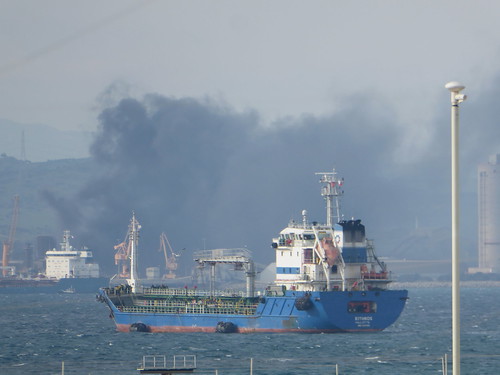
    ESG noted with some alarm the voluminous clouds of thick black smoke leaving the Acerinox complex last week. Alongside Spanish groups, it further notes there was an absence of comments by any authority, or helpful feedback from emergency numbers provided. Moreover, no statement has been forthcoming from the company itself.


    The ESG believes that this is not the way for an industry to behave in this day and age when a factual and transparent announcement, stating cause and composition of fire, is the least all Bay citizens deserve. Prevalent winds sent this cloud throughout the Campo area and towards Gibraltar so we were all affected.


    It is unacceptable for silence to follow such an incident, which, though brief, had such a widespread and cross border range. The ESG will include this incident with others being assembled in a dossier for EU purposes.


    Thick Smoke at Acerinox Jan 2017


  •
